

Planning a telehealth ADHD assessment? This guide explains the booking, intake, observer and childhood-record questions to check before your appointment. My Specialist GP provides information and connects you with independent clinicians; check the selected clinician’s process rather than assuming every service follows the same steps.
In this article
- Step 1: Check the clinician and book
- Step 2: Complete the requested intake
- Step 3: Check observer arrangements
- Step 4: Gather available childhood records
- Step 5: Check what is ready for your clinician
- Step 6: Prepare for the first telehealth appointment
- Step 7: Clarify the outcome and follow-up
- Frequently asked questions
Step 1: Check the clinician and book
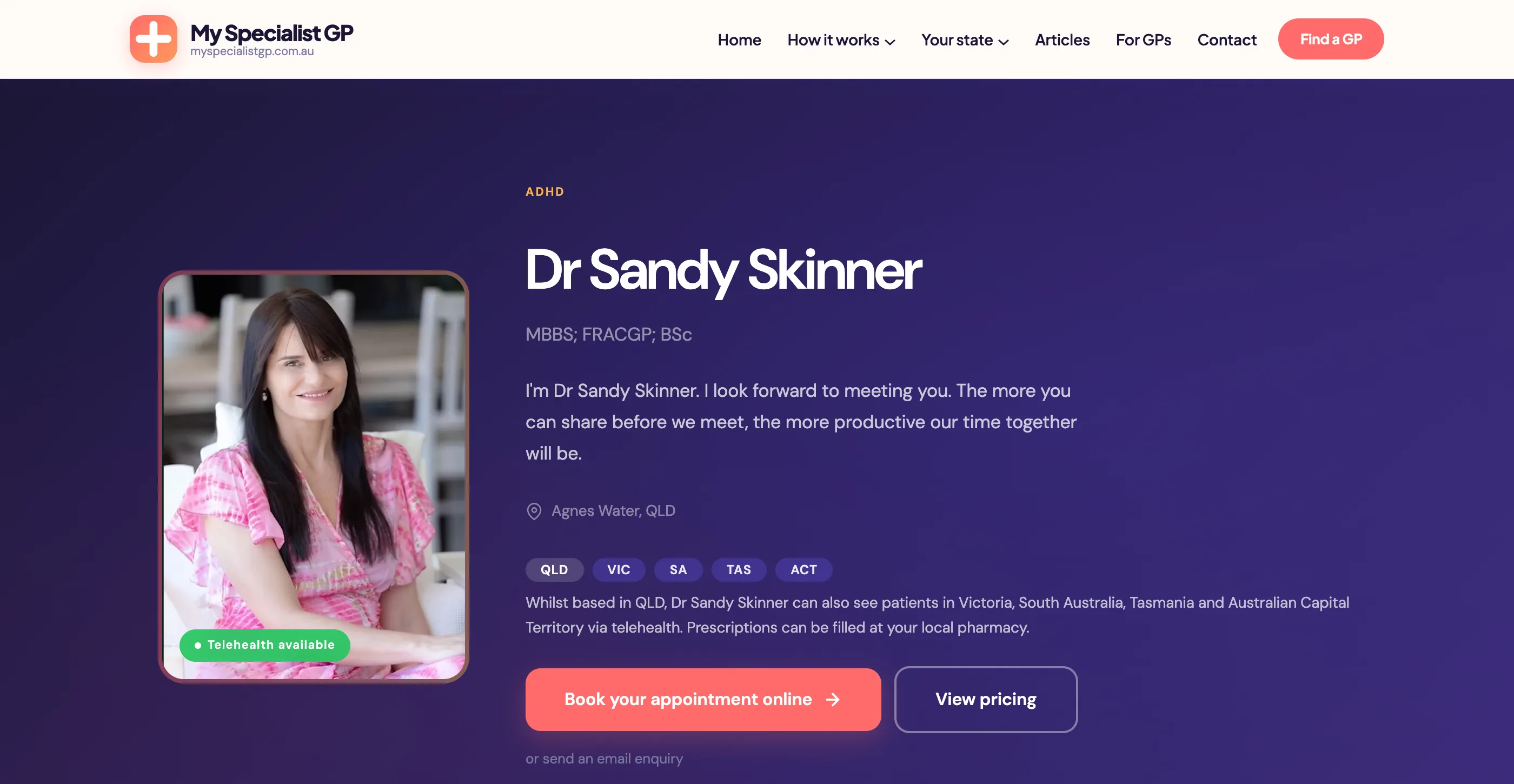
Start with Find a GP. Check the clinician’s current state availability, services and fees before choosing an appointment. Use the state-by-state GP pathway guide to find the relevant state information. A telehealth listing is not a promise that a clinician can provide every service in every state.
Before booking, ask whether the clinician offers the type of assessment you need, whether there are age or location limits, and what is included in the advertised fee. Check any later appointment costs and cancellation terms separately. Use the pricing guide and Medicare and telehealth guide to prepare those questions; confirm your own costs with the clinician.
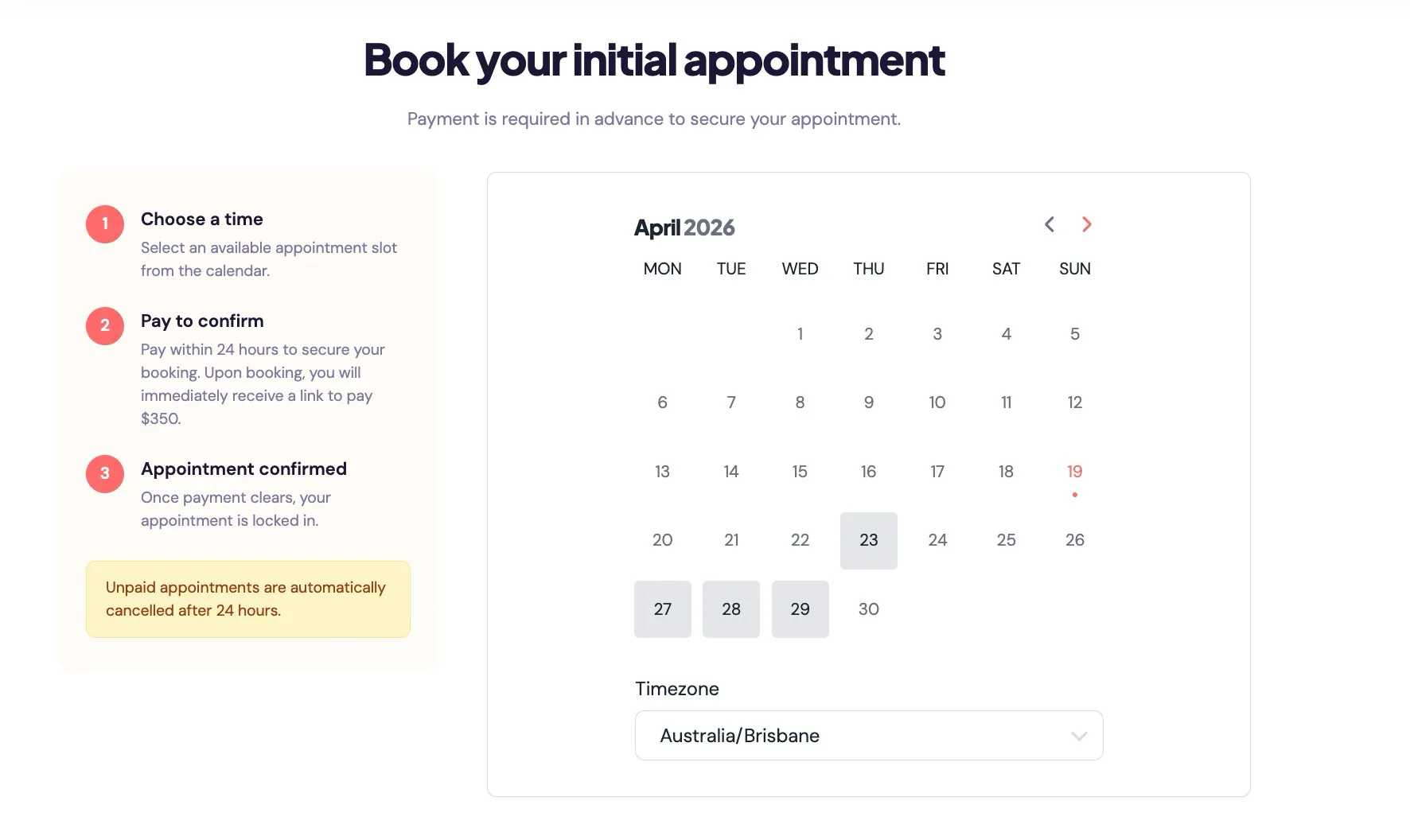
Follow the clinician’s booking and payment instructions. Check your confirmation for the appointment time, video link and preparation instructions. If something is missing, contact the clinician using the details on their profile.
Step 2: Complete the requested intake
Check how and when your clinician will send the intake invitation, which forms you need to complete and the submission deadline. If your invitation has not arrived, check your email folders and contact the clinician before using a link from an unexpected sender.
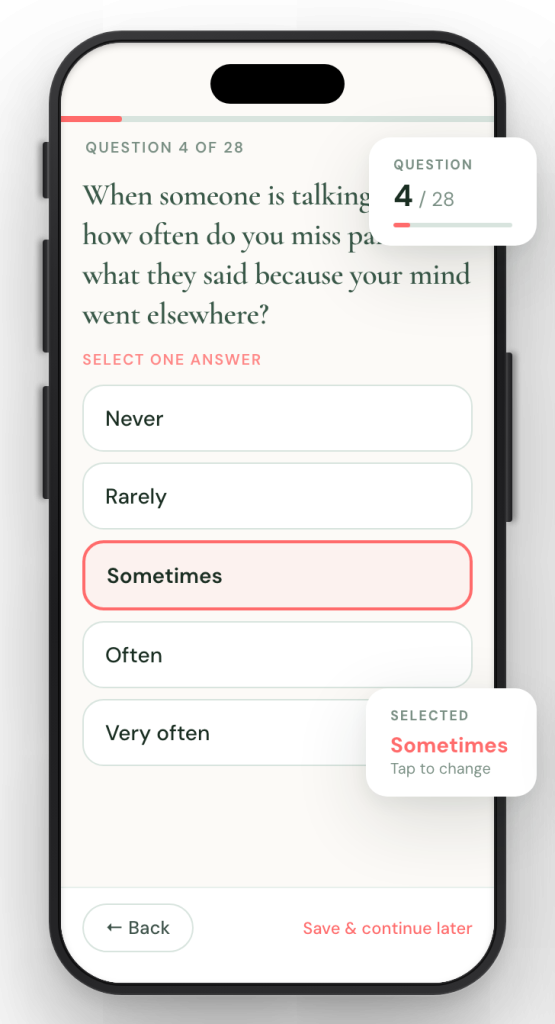
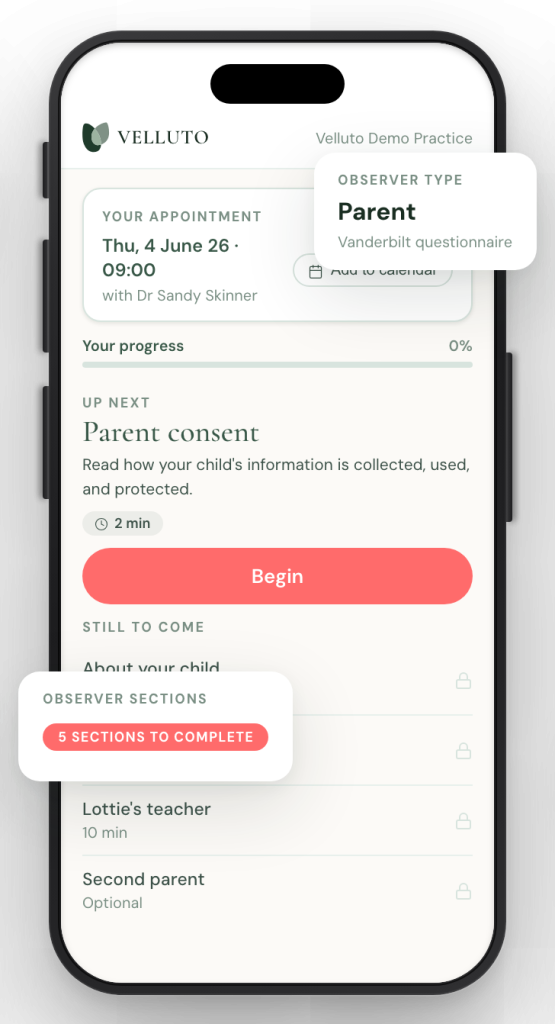
Where your clinician uses Velluto, the product supports questionnaires on your phone, supporting-document uploads and observer reports. Follow your own invitation: this does not mean every clinician uses the same questionnaires or that completing them guarantees a particular assessment outcome. Read about the Velluto intake approach.
The Australian ADHD guideline’s assessment overview describes interviews, questionnaires and information from other people as components of assessment. It lists the adult ASRS as one example of a rating scale, rather than a universal form for every patient.
Use these questions to organise your intake:
- Which forms apply to my appointment?
- What information about my health, current medicines and previous assessments should I have available?
- Can I save my progress, and who can help if I cannot access a form?
- When does the clinician need my completed forms and documents?
If a psychologist has already assessed you, upload the full report with your intake. Here is why the GP still asks for the intake and a first appointment.
Step 3: Check observer arrangements
Ask whether your clinician requests an observer report and who would be suitable. Possible people to discuss include a partner, relative, close friend, housemate or colleague who knows you well. Check whether the clinician needs information about your current life, childhood or both.
For a Velluto observer invitation, the nominated person receives a separate questionnaire link. Check the email address with them and ask them to follow their own invitation. Ask your clinician how the report will be used and what to do if it is delayed.
What if you have nobody who can complete an observer report? Tell the clinician before the appointment. Ask what other information they need and whether that changes your preparation or appointment plan. This guide cannot promise that one alternative will meet every clinician’s requirements.
Step 4: Gather available childhood records
The Australian ADHD guideline discusses developmental history and school reports where available. It also describes information from people who knew you during childhood. These are sources of background information, not a checklist that guarantees an assessment conclusion.
Ask your clinician which records would be useful. Possible records to discuss include school reports, previous health-professional reports or information from someone who knew you as a child. Follow the clinician’s instructions for sharing them; keep the original documents.
What if you do not have school reports? Tell the clinician what you have and what is missing. Ask whether other records or recollections would help. If you want to request old school records, check the relevant school or education department’s current process; this guide does not promise that records exist or set a retrieval timeframe.
What if you have no family or childhood contacts? Explain that before your appointment and ask how the clinician will approach the missing information. Do not assume you must locate a particular person before you can ask about assessment.
If your clinician uses Velluto document upload, follow the instructions in your own intake link. Check that uploaded images are readable and ask how to share documents that will not upload.
Step 5: Check what is ready for your clinician
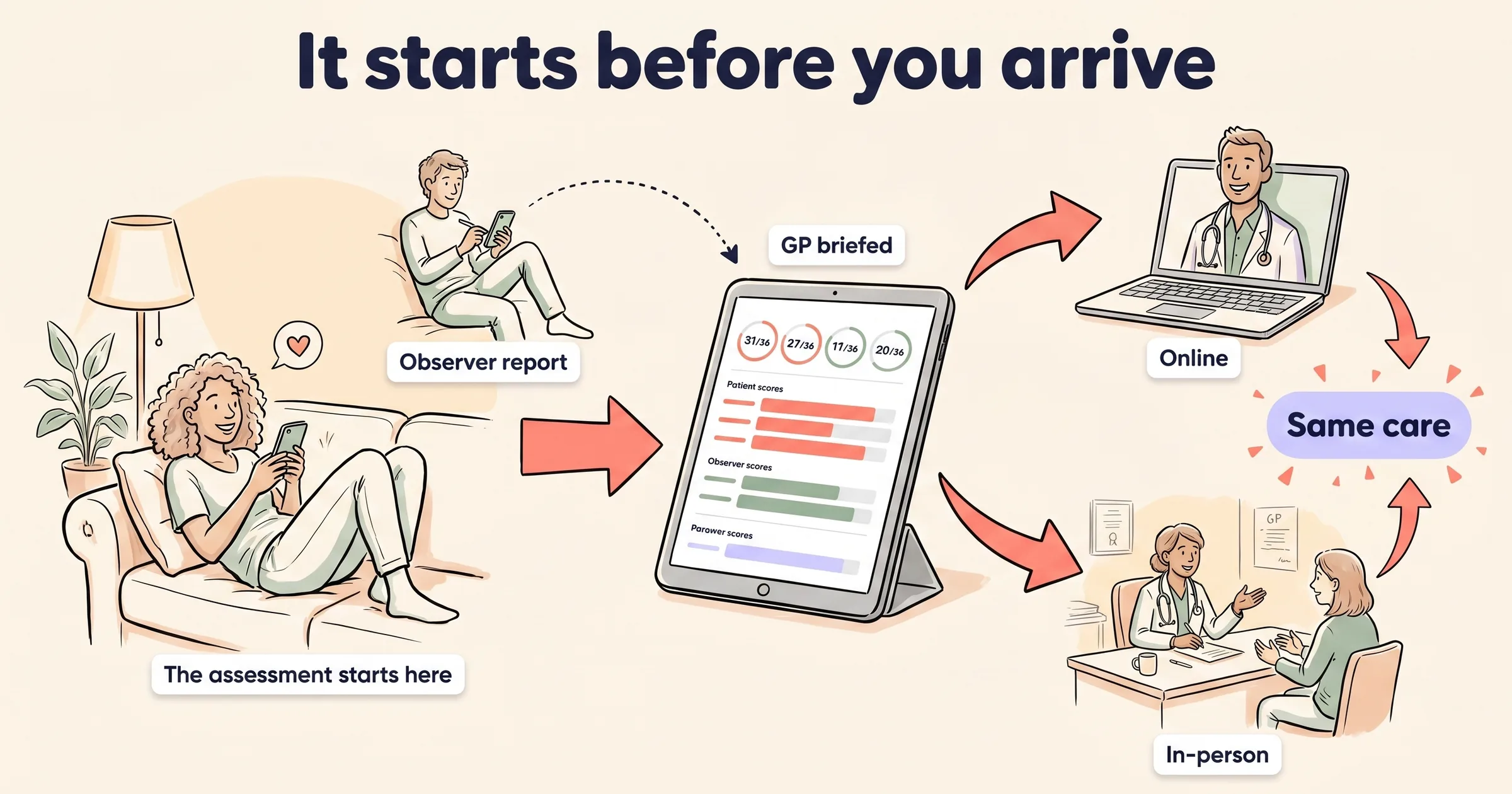
Velluto brings questionnaires, observer information and supporting documents into a structured summary for the clinician. That is preparation for the consultation, rather than a substitute for the clinician’s assessment. Ask whether your information has arrived and whether anything is still needed.
Keep a short list of corrections or details you want to clarify. Do not assume the clinician has already reviewed every document or that they will never revisit a questionnaire answer during the appointment.
Step 6: Prepare for the first telehealth appointment
Check the appointment length, video-call instructions and preparation deadline. Have the clinician’s contact details available in case the connection fails. Use the first-appointment preparation guide to organise your questions. If you are deciding between formats, compare an online or in-person ADHD assessment before booking.
The Australian ADHD guideline describes assessment of symptoms and their history, day-to-day impact, health and other possible explanations. Its overview refers to “interviews and questionnaires, as well as multiple informants”. Read the AADPA assessment overview for the full context.
For your appointment, write down what you want help understanding and any information you need to correct. Ask how you will receive the next steps and whom to contact afterwards.
Step 7: Clarify the outcome and follow-up
Before the appointment ends, ask what conclusions have been reached, what remains uncertain and whether further information or appointments are needed. Ask who will coordinate any next steps, what they will cost and when you should contact the clinician again.
Use the state pathway guide for the relevant state links. For Queensland, the government publishes ADHD management information. Ask the individual clinician what services they can offer in your circumstances; do not assume that booking a telehealth assessment includes every later service or removes the possibility of referral.
There is no single booking-to-outcome timetable promised by this guide. Check current appointment availability and follow-up arrangements with the clinician. Find an independent clinician and check their current profile.
This guide provides general information, not personal medical advice. Ask your GP or another qualified health professional for advice about your own circumstances.
Frequently asked questions
-
How long will my telehealth ADHD assessment take?
Check the length of each appointment and ask whether further appointments or information may be needed. Confirm follow-up availability and costs with the selected clinician; this guide does not promise a completion date.
-
What if I have nobody to complete an observer report?
Tell the clinician before the appointment. Ask what other information they need and whether this changes your preparation or appointment plan.
-
What if I do not have school reports?
Tell the clinician which records are available and which are missing. Ask what other information they would like you to provide; do not assume that old school records can always be retrieved.
-
What if I have no family or childhood contacts?
Explain your situation to the clinician before your appointment. Ask how they will approach the missing information and what you can prepare yourself.
-
How do I check whether a clinician can see me by telehealth?
Start with Find a GP, select your state and read the individual clinician’s current profile. Confirm the service, age range, location requirements, fees and booking instructions before making an appointment.
General health information
This article is general health information only. It is not a substitute for professional medical advice, diagnosis, or treatment. Always speak with a qualified health professional before making any changes to your medication or treatment plan.
MySpecialistGP is a health information and GP directory service operated by Webbed Feet Pty Ltd. Read our Medical Disclaimer.
