

Most people start Vyvanse knowing they should “take it in the morning.” Few know why protein at breakfast helps, why a glass of orange juice at the wrong time can blunt the effect, or why that second coffee is making things worse. This post covers the science behind each factor — clearly, without the wellness fluff.
Quick links
- How Vyvanse Actually Works in Your Body
- Why a Protein Breakfast Matters
- Vitamin C and Acidic Foods: What to Avoid and When
- Why Coffee Makes Things Worse
- Sleep, Timing, and Hydration
- What It Should Feel Like When It Is Working

How Vyvanse Actually Works in Your Body
Vyvanse (lisdexamfetamine) is a prodrug, which means it is inactive when you swallow it. It reaches your small intestine intact, gets absorbed into your bloodstream, and is then converted by enzymes inside your red blood cells into d-amphetamine — the active compound that acts on your brain.
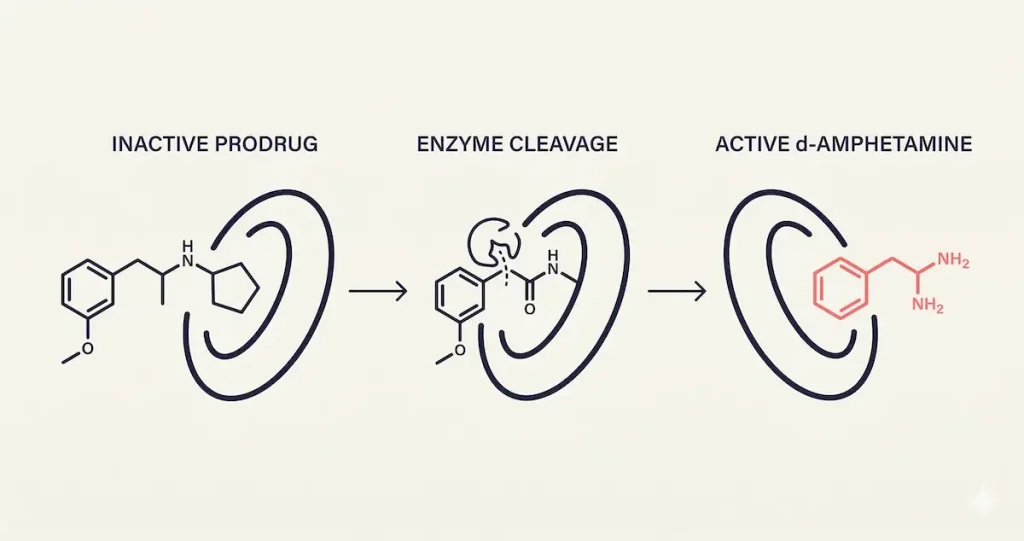
This conversion process happens at a consistent rate, which is what gives Vyvanse its smooth, gradual onset compared to older stimulant formulations. It also means the medication cannot be tampered with or abused easily, because the drug only activates once it is inside the body.
Once active, d-amphetamine works by forcing dopamine and noradrenaline out of presynaptic nerve terminals and blocking their reuptake. The result is higher levels of these neurotransmitters in the prefrontal cortex — the part of the brain responsible for attention, impulse control, and working memory.
The half-life of d-amphetamine is approximately 10 to 11 hours in adults. A dose taken at 7am reaches peak concentration around 10am to 11am and remains therapeutically active until the evening.
Why a Protein Breakfast Matters
Dopamine is synthesised from tyrosine, an amino acid that comes from dietary protein. Amphetamine forces dopamine release from existing stores — it does not create new dopamine. Those stores are replenished over time, and the raw material is tyrosine from your diet.
Skipping breakfast does not produce a stronger medication effect. The total drug absorbed is the same whether you eat or not. A high-fat meal delays the peak by about one hour but does not reduce overall exposure. What a protein-containing breakfast does is support the dopamine precursor pool the medication draws on throughout the day.
Good sources: eggs, Greek yoghurt, cottage cheese, smoked salmon, chicken, legumes. Distribute protein across breakfast and lunch — not one large serve and nothing after.
Practical advice: Take Vyvanse 30 to 60 minutes before breakfast for the fastest onset. If you get nausea on an empty stomach, take it with a light meal. The total effect is equivalent either way.
Sources: Role of Tyrosine in Executive Function and Reward (PubMed Central) | FDA Vyvanse prescribing information 2023
Vitamin C and Acidic Foods: What to Avoid and When
d-Amphetamine is a weak base. In alkaline urine, the kidneys reabsorb it back into the bloodstream, extending its duration. When urine becomes more acidic, the drug shifts into a form the kidneys cannot reabsorb — and it is excreted faster.
Vitamin C (ascorbic acid) acidifies urine and speeds up d-amphetamine excretion. This interaction is listed in the FDA prescribing information for amphetamine. The practical risk is not eating an orange — it is high-dose vitamin C supplements (500mg or above) taken close to your dose time, or drinking large amounts of citrus juice at the same time as the medication.
If your medication consistently wears off earlier than expected, high vitamin C intake is one of the first things to check.
Practical advice: Avoid vitamin C supplements above 500mg within one to two hours of taking Vyvanse. If you take vitamin C supplements, take them in the evening.
Sources: Drugs.com — Amphetamine and Vitamin C interaction | Tulane Pharmwiki — pH effect on drug elimination
Why Coffee Makes Things Worse
Caffeine blocks adenosine receptors to reduce drowsiness. Amphetamine increases dopamine and noradrenaline directly. Together, they place significant load on your cardiovascular system and amplify your sympathetic nervous response.
The result: anxiety, jitteriness, elevated heart rate, and palpitations — symptoms many patients describe as the medication “not feeling right,” when the caffeine is the actual cause.
Stimulant ADHD medications alone produce a mean increase in resting heart rate of 5.7 beats per minute and systolic blood pressure of 2.0 mmHg, based on a meta-analysis of 2,665 adults. Caffeine adds to that load.
There is no established safe amount of caffeine to combine with amphetamine. Energy drinks should be avoided completely.
Practical advice: Avoid caffeine while establishing your dose. Once stable, discuss with your GP whether moderate coffee use suits your individual situation.
Source: Adult ADHD Medications and Cardiovascular Implications (PubMed Central)
Sleep, Timing, and Hydration
Timing: Take Vyvanse at the same time every morning, between 6am and 8am. A dose after 9am risks active stimulant on board at sleep time. The 10 to 11 hour half-life of d-amphetamine means a 10am dose can affect sleep quality at midnight.
Sleep: Poor sleep reduces dopamine receptor availability in the striatum — confirmed by PET imaging studies. The same dose produces a noticeably blunted effect after a bad night, because the receptor substrate the medication works on has been depleted. Treating sleep problems is not optional if you want consistent results.
Hydration: Stimulants suppress appetite and with it, thirst recognition. ADHD also reduces interoceptive awareness (Kutscheidt et al., 2019) — the ability to notice internal signals like thirst. Many people on Vyvanse under-drink without realising it. Dehydration impairs the same executive functions the medication is trying to support.
Practical advice: Aim for at least 2 litres of water per day. Use a visible water bottle or set phone reminders — do not rely on feeling thirsty.
Sources: ADHD Treatments, Sleep, and Sleep Problems (PubMed Central) | Sleep Deprivation and Stimulant Medications (PubMed Central) | CHADD — Stimulant Medication and Dehydration
What It Should Feel Like When It Is Working
Vyvanse working correctly does not feel like a jolt of energy or a dramatic personality shift. For most people, the first sign is an absence: the background noise quiets. Tasks that feel impossible to start become more manageable.
The medication does not provide motivation or willpower. It provides access to the part of your brain that was already there. Work still requires effort — it just stops feeling like wading through concrete.
If you feel anxious, wired, or like your heart is racing, those are side effects, not the medication working. This is a signal to discuss dose or timing with your GP.
Should I take Vyvanse with or without food?
Either works. Taking it with a high-fat meal delays the peak by about one hour but does not reduce the total effect. Take it with a light meal if you experience nausea on an empty stomach, or 30 to 60 minutes before eating if you need it to work quickly in the morning.
Does vitamin C really affect how long Vyvanse lasts?
It can, at supplement doses above 500mg taken close to your dose time. Vitamin C acidifies urine, which causes the kidneys to excrete d-amphetamine faster rather than reabsorbing it. A single piece of fruit is unlikely to be significant. High-dose vitamin C supplements are a different matter and should be taken in the evening.
Can I drink coffee while taking Vyvanse?
Caffeine adds cardiovascular load on top of the medication and amplifies stimulant side effects including anxiety and elevated heart rate. There is no established safe amount to combine with amphetamine. Avoid caffeine while establishing your dose, then discuss with your GP once your dose is stable.
Why does my Vyvanse feel less effective some days?
The most common causes are poor sleep the night before, skipped or delayed breakfast, dehydration, and high vitamin C intake close to the dose. Stress and hormonal variation — particularly in the premenstrual phase — also affect response. If the pattern is consistent, bring a diary of the variation to your next appointment.
Does exercise affect how Vyvanse works?
Aerobic exercise supports dopamine synthesis independently of medication (Kim et al., 2011). Animal research suggests combining exercise with low-dose stimulant treatment may have additive benefits (Robinson & Bucci, 2014), though human clinical trials are limited. If you train at high intensity, discuss this with your GP given the combined cardiovascular load of stimulants and vigorous activity.
The factors that affect how well Vyvanse works are well-documented. Protein at breakfast, consistent timing, no caffeine, adequate water, and quality sleep each have a direct mechanism that interacts with how the medication works in your body. If your medication is not performing consistently, check these factors before assuming the dose is wrong.
General health information
This article is general health information only. It is not a substitute for professional medical advice, diagnosis, or treatment. Always speak with a qualified health professional before making any changes to your medication or treatment plan.
MySpecialistGP is a health information and GP directory service operated by Webbed Feet Pty Ltd. Read our Medical Disclaimer.
